










Choosing the right parasol
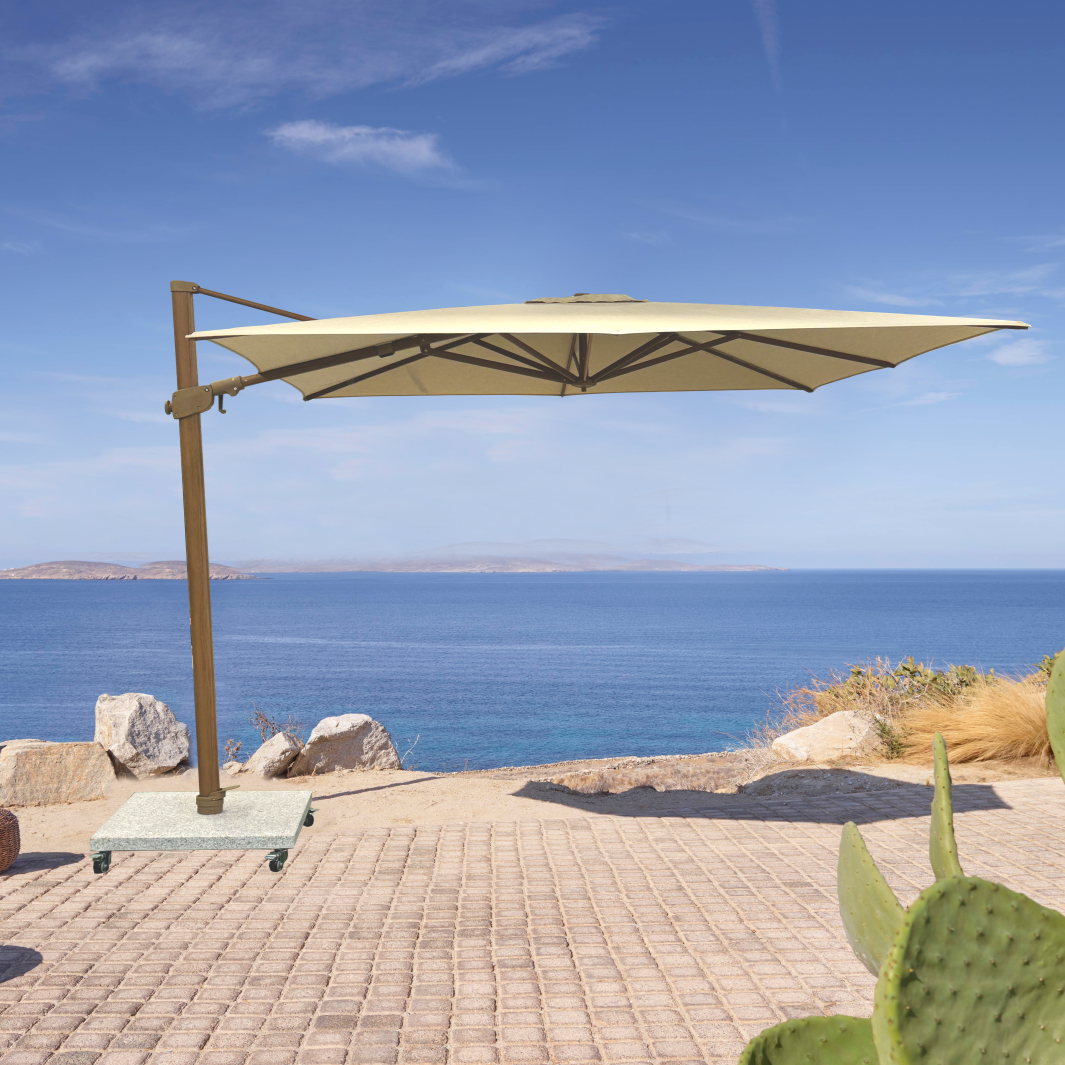
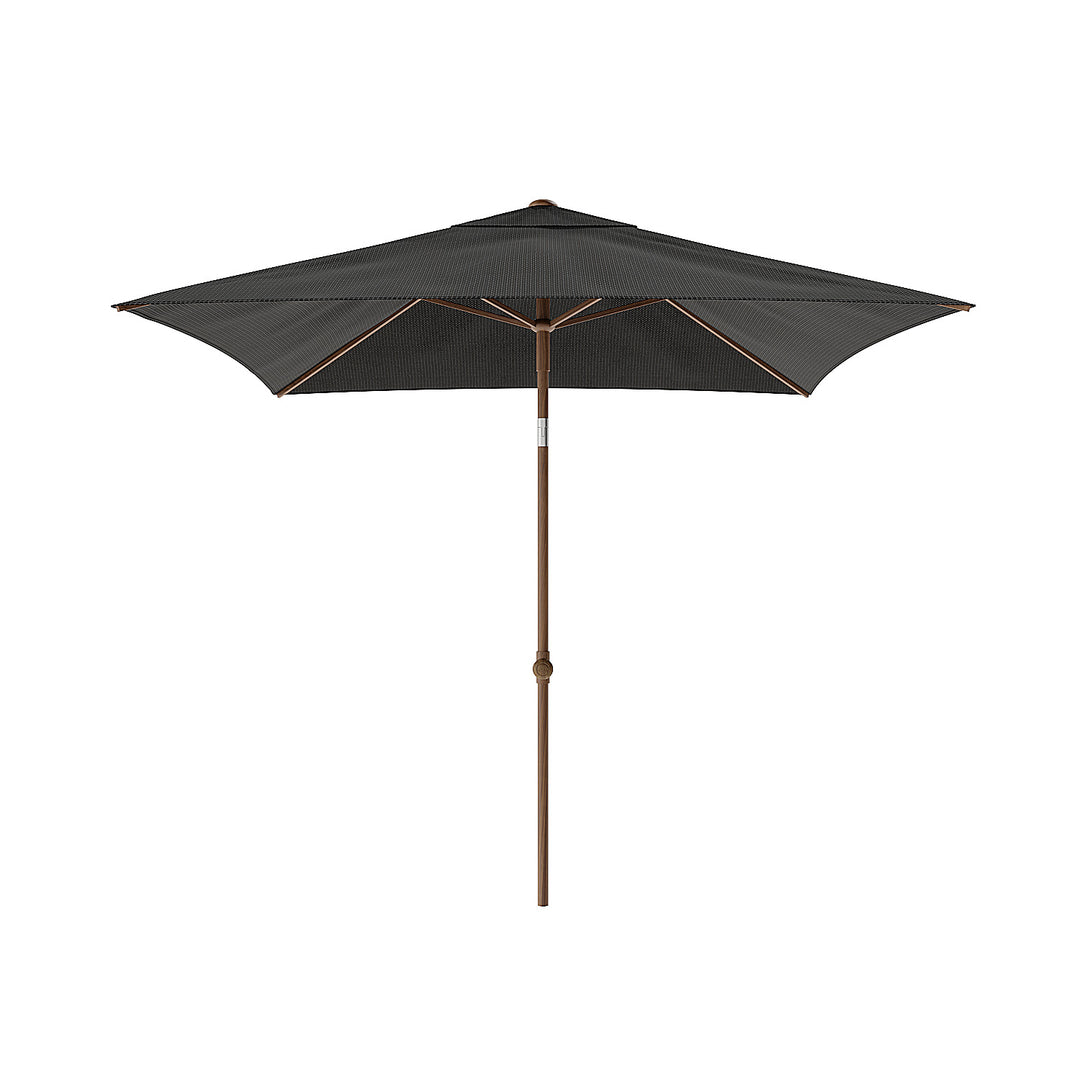
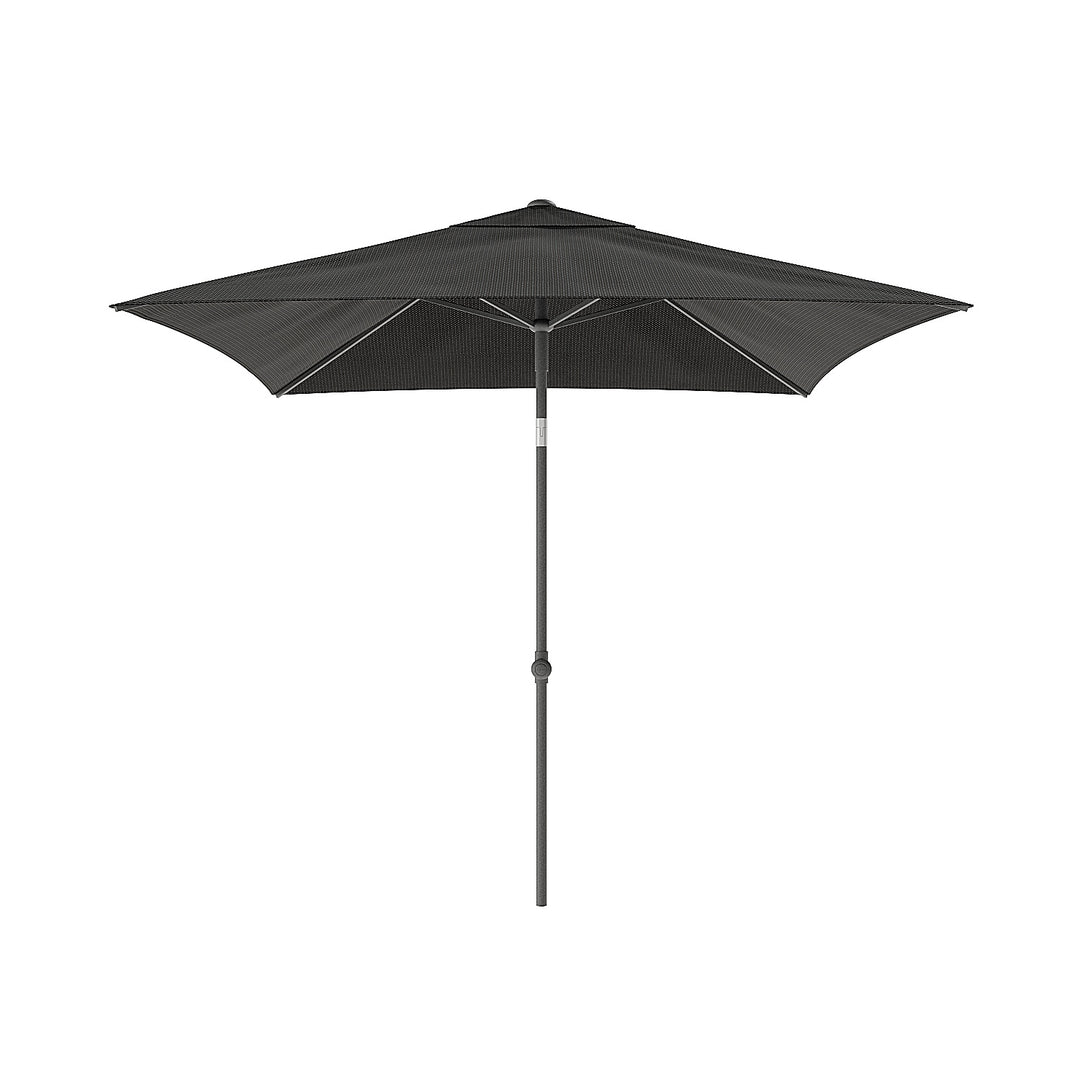
When choosing a parasol, it is important to consider the quality of both the parasol fabric and the frame. The quality of the fabric affects how well the parasol protects against UV rays, how long it lasts, and how well it retains its color. The wind resistance of the parasol is determined by the strength of the frame and how much wind it can withstand in an open horizontal position. Below you will find an overview of the different types of parasol fabrics and their properties, as well as the wind resistance of various parasol models.
Different Types of Parasols Fabrics
Polyester
- Made from synthetic fiber.
- Popular for affordable parasols.
- All our polyester parasols have a weight of 240 grams/m², the UPF value is 35+, which blocks 95% of UV rays.
- Note: Can fade after one summer. The UPF value will also decrease.
- Example: Valencia.
Olefin
- Made from synthetic yarn.
- Retains color longer than polyester.
- UPF value from 40 to 50+, blocks 97% of UV rays.
- Strong material, tear-resistant.
- Example: Mallorca
Sunbrella (Acrylic)
- Made from acrylic yarn, colorfast due to yarns dyed in the core.
- Sunbrella fabrics are breathable and allow air to pass through. This creates a comfortable space under the sunshade.
- UPF value almost always 50+, blocks 99% of UV rays.
- Water-repellent and resistant to bacteria and fungi.
- Color lasts up to 10 years.
- Example: Monaco, Antego, Azore, Kingston, Caractère series.
Wind resistance of Parasols
Below you will find a table with models and their wind resistance in km/h:
| Model | Wind resistance (km/h) |
|---|---|
| Valencia | 24 |
| Mallorca | 38 |
| Azore | 27 |
| Monaco | 38 |
| Antego | 38 |
| Lima | 45 |
| Caractère | 58 |
What is UPF?
UPF (Ultraviolet Protection Factor) indicates how much UV radiation a parasol fabric blocks.
- UPF 40 to 50+: Excellent protection (97.5% to 99% UV blocking).
- UPF 25 to 35: Good protection (95.9% to 97.5% UV blocking).
- UPF 15 to 20: Moderate protection (93.75% to 94% UV blocking).